
Troy Landon - We'll Leave the Light On
Updated: 20 hours ago
Sometimes people just need to know there's someone waiting for them. I really like this simple idea behind Troy Landon's “We'll Leave the Light On.” I particularly like how the arrangement starts gently and gradually becomes bigger, giving the lyrics enough space to tell their story. There's a clear influence from classic country songwriting, especially in the focus on everyday struggles and human relationships.
Interview with Troy Landon

(^)> What inspired you to write “We’ll Leave the Light On,” and was there someone specific you had in mind?
The whole song actually started with one line that came into my head: “Maybe the world isn't as broken as we thought.”
I started thinking about everything going on in the world today. There's so much anger, division, and conflict. People seem to be constantly arguing over politics, beliefs, and just about everything else. Sometimes it feels like we've forgotten how to simply be kind to one another.
But I don't believe the world is as broken as it sometimes seems. I still believe there are a lot of good people out there who care about others. Unfortunately, we don't always hear about them because the negative stories tend to get most of the attention.
There wasn't any particular person I had in mind when I wrote the song. It was really meant for everyone.
I wanted to remind people that we don't have to agree on everything to show kindness, compassion, and respect toward one another. We can have different opinions without turning our backs on each other.
That's really where the idea of leaving the light on came from. To me, it represents hope. It's about keeping that door open, not giving up on people, and remembering that there's still goodness in this world.
If the song makes someone stop for a moment and think about that, then I've accomplished what I wanted to do.
(^)> Why did you choose country music to tell this particular story?
Country music has always been a big part of my life. I grew up listening to classic country and later the country music of the 1980s and 1990s. Those artists had a tremendous influence on me and the way I approach songwriting.
What I've always loved about country music is the storytelling. You can take something as simple as an everyday experience and turn it into a song that people can relate to.
Sometimes it's about love or heartbreak. Other times, it's about family, hardship, faith, or just trying to get through life. But the best country songs have a way of making you feel like you're part of the story.
When I wrote “We'll Leave the Light On,” I felt country music was the natural way to tell that story.
I didn't want the song to come across as preaching to people. I wanted it to feel sincere, almost like someone sitting down and having a conversation with you about the world around us.
Country music has always been able to do that.
I also wanted the lyrics to remain the focus, with the music helping to carry the emotion of the message.
To me, that's what makes country music so special. You can tell a simple story in a few minutes and sometimes leave someone thinking about it long after the song has ended.

(^)> How did you decide how the arrangement should build emotionally without overpowering the lyrics?
For me, the lyrics always come first. Before I start working on the music, I need to know what the song is saying and how I want people to feel when they hear it.
With “We'll Leave the Light On,” I wanted the beginning to be fairly restrained. That opening line, “Maybe the world isn't as broken as we thought,” needed some room to breathe. I didn't want a big arrangement distracting from it.
As the song progresses, I wanted the music to gradually become warmer and stronger, building alongside the message of hope in the lyrics.
That's something I learned from listening to country music over the years. Some of the best arrangements aren't necessarily the biggest or loudest. They're the ones that know when to step forward and when to stay in the background.
Even though I use AI in my production process, I still have to make those decisions.
I use detailed instructions and metatags to guide the instrumentation, dynamics, and emotional direction of the performance. Then I listen to what comes back and decide whether it's doing what I want.
Sometimes it gets it right. Other times, I have to go back, make changes, and try again. I might adjust the arrangement, change how a section is structured, or rethink how I want a particular line delivered.
Once I have a version I'm happy with, I continue with the editing and mastering.
I've never believed that every song needs a huge production. Sometimes holding back is what makes a particular moment more powerful.
With this song, I wanted the music to build naturally, but I never wanted it to become more important than the words.
(^)> Troy Landon is a virtual artist. Why create a separate musical identity rather than release everything under your own name?
There's actually a very personal reason behind creating Troy Landon.
I've been writing songs and involved in music production for more than 25 years, but I've never been able to play a musical instrument or sing.
Because of that, I've never been able to perform my own songs the way I've always imagined them.
When I'm writing, I can hear the music in my head. I can imagine how the singer should deliver the lyrics, how the instruments should come together, and even picture the band performing the song.
The problem was that I couldn't actually bring those performances to life myself.
For years, I had all these musical ideas and could hear exactly what I wanted, but I didn't have the ability or financial resources to make them happen the way I envisioned.
Then generative AI came along and changed that.
Suddenly, I had a way to create a singer and a band that could perform my songs much closer to the way I hear and see them in my imagination.
For someone who's spent so many years writing music without being able to perform it, that's a pretty incredible opportunity.
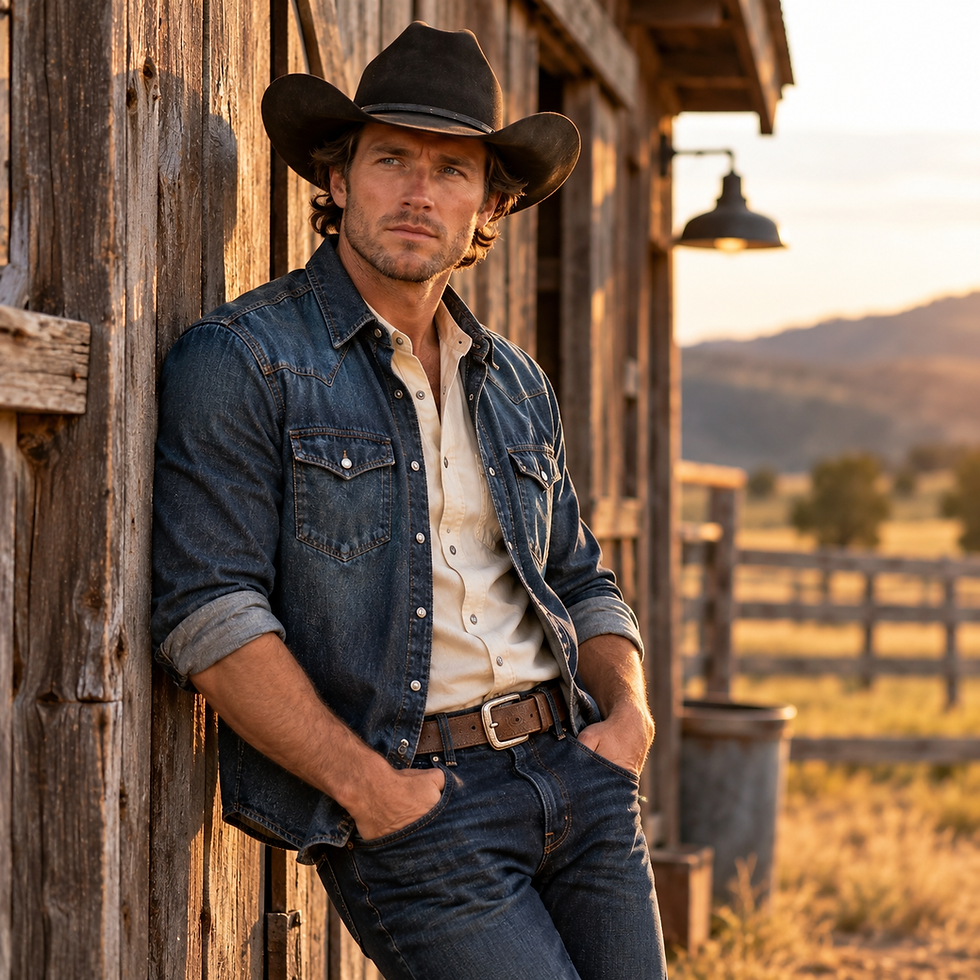
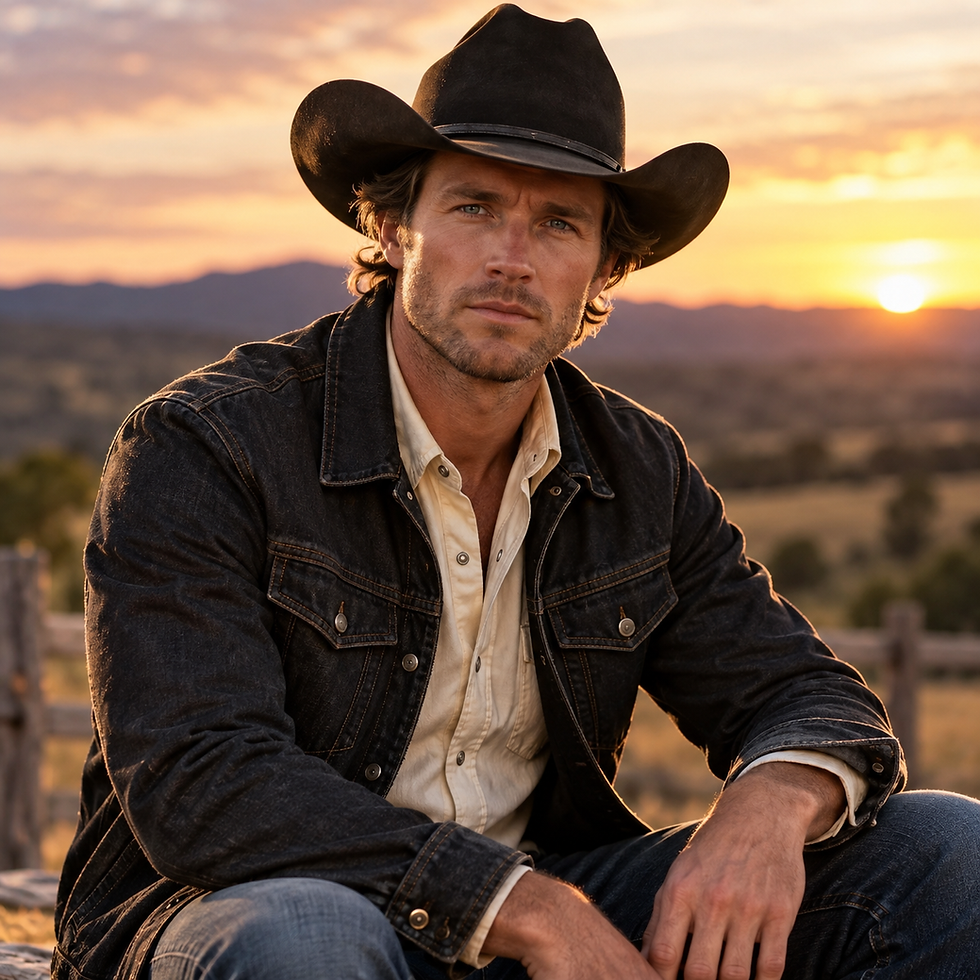
I created Troy Landon because I wanted a consistent country artist with his own recognizable voice, style, and musical identity. His sound is influenced by classic country music and the artists of the 1980s and 1990s that I grew up listening to.
I also wanted to keep my role as the songwriter and producer separate from the performer. Troy is the virtual artist who brings the songs to life, while I'm the person writing and producing the music behind him.
And I've always been upfront about that. I've never tried to make people believe Troy is a traditional human performer.
To me, Troy Landon isn't about pretending to be something I'm not or replacing a human singer.
It's about finally being able to share the music I've been hearing in my head for all these years.

(^)> How much control do you have over Troy's vocal delivery, and what happens when the AI doesn't capture the emotion you intended?
I have quite a bit of control, but it's definitely not perfect.
I think one of the biggest misconceptions about AI music is that you just type in a few words, hit a button, and you're finished.
That's certainly not how I work.
I use metatags directly within my lyrics to help guide the vocal delivery, instruments, dynamics, and overall feel of the song.
For example, I might want a verse to sound conversational and restrained, but then have the chorus open up with a much stronger vocal performance. Or there might be one particular line where I want the singer to put more emotion into the words.
You have to understand what you're trying to accomplish musically before you can give those instructions.
Sometimes the AI interprets what I want beautifully. Other times, it completely misses the mark.
When that happens, I go back and make changes. I might adjust the metatags, rewrite part of the phrasing, change the structure, or generate another version.
And sometimes something unexpected happens that actually sounds better than what I originally had in mind. When that happens, I'm certainly willing to work with it.
In a way, I look at it like directing a singer in a recording studio. The difference is that instead of standing there telling someone how I want a line sung, I'm communicating those instructions through the lyrics and production directions.
The final decision still comes down to what I'm hearing.
If the performance doesn't communicate the emotion I want, I keep working on it until I find one that does.
(^)> Can an artificial voice communicate genuine human emotion, or does that connection depend entirely on the listener?
Yes, I believe it can, even though the AI itself doesn't actually feel those emotions.
To me, the emotion starts with the songwriter.
When I write a song, the lyrics come from my own thoughts, feelings, and experiences. I'm trying to communicate something to the person listening.
The challenge is getting that emotion across through the performance.
That's where a lot of the production work comes in.
I use metatags to guide how the vocals should be delivered, but I also work with the actual wording and punctuation of the lyrics.
For example, sometimes extending the spelling of a word can encourage the AI to hold a note longer. An exclamation point can sometimes make a particular line come across with more strength or intensity.
It doesn't always work exactly the way I want, but those are some of the techniques I use to shape a performance.
It's really not that different from a producer asking a human singer to hold a note longer or put more emphasis on a certain word. I'm just doing it through written instructions.
But I also believe the listener is a very important part of that emotional connection.
Think about instrumental music. There doesn't even have to be a voice for a piece of music to make someone feel happy, sad, or emotional.
The instruments themselves don't have feelings, but the music can still create a very real emotional response.
I believe the same thing can happen with an artificial voice.
Now, that doesn't mean AI can replace everything a human singer brings to a performance. Human singers have their own experiences, instincts, and emotions, and I have tremendous respect for that.
But if a song I've written reaches someone and makes them feel something, I don't believe that feeling becomes any less real simply because the voice performing it is artificial.
The emotion behind the writing is human, and the emotion the listener experiences is human. That's what matters to me.

(^)> You've been transparent about using generative AI. Have you faced criticism from musicians or listeners because of that decision?
Oh, absolutely. I've had people call me fake, a fraud, and even a thief because I use generative AI in my music.
But I don't let it get to me.
I've been completely transparent from the beginning about Troy Landon being a virtual artist and about my use of AI in the production process. I've never tried to hide it or mislead anyone.
I understand that AI music is controversial, and I respect that people have different opinions about it. I also understand that some traditional musicians have legitimate concerns about what this technology could mean for their livelihoods.
Those are concerns worth discussing.
But there's a big difference between constructive criticism and simply attacking someone because you don't agree with how they're creating music.
I know how much time, effort, and creativity I put into my songs. Not everyone is going to agree with what I'm doing, and that's fine.
I'd rather spend my time making music and having meaningful conversations than worrying about being called names.
(^)> Where do you draw the line between AI assisting a songwriter and AI replacing the creative process?
For me, the line is crossed when someone stops treating AI as a tool and simply accepts whatever it generates as the finished product without putting any real human creativity into it.
And I'll admit, this is something that frustrates me.
There are a lot of creators out there, including myself, who put tremendous amounts of time and effort into writing, arranging, editing, and producing their music.
But we're often placed in the exact same category as someone who types a few lines into a lyric prompt, adds a simple style description, and lets the AI do practically everything.
I think that really cheapens the creative process.
It also gives people a false impression of what using AI in music production actually involves.
When I work on a song, I'm making decisions throughout the entire process. I'm writing the lyrics, determining the musical direction, guiding the performances, adjusting arrangements, and working on the final recording.
AI is helping me bring those ideas to life, but I'm not simply handing over the entire creative process.
Now, I don't have a problem with someone generating a song just for fun. If someone enjoys doing that, there's nothing wrong with it. Music should be something everyone can enjoy.
But I do believe there needs to be a distinction when we're talking about professional songwriting, music production, and artistic recognition.
There's a difference between something that's almost entirely generated by AI and something where a human songwriter or producer has put substantial creative work into the finished recording.
That's why I believe the music industry needs clearer standards and classifications for different levels of AI involvement.
Not to shut people out, but to recognize the human creativity that's actually taking place.
And those standards also need to respect traditional musicians and the work they do.
I've never believed AI and human musicians have to be enemies. I think there's room for both, and I believe there are opportunities for them to work together.
To me, AI should enhance human creativity, not replace it.
There's a big difference between asking AI to create something for you and using AI to help create something that comes from you.
(^)> Your influences include Johnny Cash, Travis Tritt and Kenny Rogers. What can modern country music learn from their storytelling?
I think the biggest lesson modern country artists can learn from those performers is that storytelling should always be at the heart of country music.
I've always believed that being able to tell a strong story in just a few minutes is one of the foundations of a great country song.
One of my favorite Kenny Rogers songs is actually one that wasn't among his biggest hits, “The Hoodooin' of Miss Fannie Deberry.”
It's a fascinating story involving voodoo and a young girl. What I love about that song is how the music fits the lyrics. Everything works together to pull you into the story.
Another favorite of mine is Alabama's “Roll On (Eighteen Wheeler).”
Again, it's the storytelling that makes that song so memorable. As you listen, you can almost picture what's happening to that family. You become involved in their experience, and the music accompanies the story rather than overpowering it.
That's what I've always loved about country music.
The artists I grew up listening to knew how to tell stories that made people feel something. Sometimes they were happy stories, sometimes heartbreaking, and sometimes they took you somewhere completely unexpected.
But they gave you something to remember.
I don't have anything against modern country music or the way the genre has evolved. Music is always going to change, and that's part of what keeps it interesting.
But I do think we need to be careful not to lose the storytelling traditions that made country music so special in the first place.
When I write, I want the lyrics and the music to work together. The arrangement should help create the atmosphere and bring the story to life.
A great country song doesn't have to be complicated. It just needs to tell a story that draws you in, makes you feel something, and stays with you afterward.
That's what I learned from those artists, and it's something I try to bring into my own songwriting.
(^)> Do you worry that AI-generated music could make it harder for independent human performers to earn a living?
Yes, absolutely. That's actually one of my biggest concerns about where this technology could lead.
I'm especially concerned about the working musicians who depend on music to make a living.
These are people who have spent years, sometimes decades, learning their instruments, developing their skills, and building their careers.
I would hate to see talented musicians lose recording sessions, performance opportunities, or other sources of income simply because someone decides AI can do the job faster and cheaper.
I understand the financial side of music production because I've experienced those limitations myself.
One of the reasons I started using AI was because traditional recording costs were simply beyond what I could afford as an independent songwriter.
AI has given me an opportunity to bring my songs to life that I might never have had otherwise.
But that doesn't mean I want to see traditional musicians replaced.
I believe there's room for both, and I think the industry needs to find ways for AI-assisted creators and traditional musicians to coexist.
I also believe there are possibilities for collaboration that we haven't even begun to fully explore.
My hope is that AI creates more opportunities within music rather than taking them away from the people who have dedicated their lives to performing it.
Technology is going to keep advancing. We can't stop that. But we can make decisions about how we use it and how we protect the people whose livelihoods may be affected.
I want to see a future where independent songwriters have more opportunities to create music without working musicians losing their opportunities to earn a living.
I don't believe those two goals have to be in conflict.
(^)> What's one creative decision on “We'll Leave the Light On” that no AI tool could have made for you?
The biggest decision was what I wanted the song to say in the first place.
It all started with that one line: “Maybe the world isn't as broken as we thought.”
That thought came from me looking at what's happening around us and thinking about how divided people have become.
I wanted to write something that reminded people there's still kindness and compassion in the world, and that we don't have to give up on one another just because we disagree.
That was a personal decision.
I wasn't simply trying to create another country song. I had something I wanted to say, and I wanted to find the right way to say it.
Once I had that message in mind, it shaped everything else, including how I wanted the music to feel and how the arrangement should develop.
AI could help me create the performance, but it couldn't decide for me why that message was important or why I felt it needed to be written.
Those thoughts and feelings came from me.
That's the difference I keep coming back to when I talk about AI as a creative tool.
It can help me bring a song to life, but the reason I wanted to write that song in the first place is something that came from my own experiences and beliefs.
(^)> If someone finds comfort in Troy Landon's voice without knowing he's virtual, does discovering the truth change the meaning of that experience?
No, I don't believe it changes what that person felt when they heard the song.
If someone listens to Troy Landon and finds comfort, hope, or encouragement in the music, those feelings are real.
But this is also exactly why I'm such a strong believer in transparency from the very beginning.
I want people to know upfront that Troy Landon is a virtual artist, that his voice and persona are AI-generated, and that the lyrics are written by a human songwriter.
I don't want someone listening to the music and later feeling like they've been cheated or deceived because they thought Troy was a traditional human performer.
I believe that when people know the truth from the beginning, they can approach the music with a more open mind.
They can listen to the lyrics, appreciate the production, and decide for themselves whether the song connects with them.
And yes, I absolutely believe someone can develop just as strong an emotional connection with a virtual artist as they can with a traditional human performer.
Music has always been about how it makes us feel.
A song can remind us of someone we love, bring back memories, or help us through a difficult time. Those experiences don't suddenly disappear because we learn something different about how the recording was created.
The lyrics I write come from my own thoughts, feelings, and experiences. The stories and messages are human, even though I'm using AI to bring them to life.
I understand that some people may feel differently about virtual artists, and I respect that. Everyone has the right to decide what kind of music they want to listen to and support.
But I'd much rather someone listen to Troy knowing exactly what he is than discover it later and feel misled.
If “We'll Leave the Light On” helps someone feel a little less alone, reminds them that there's still goodness in the world, or gives them hope when they need it, then the song has done exactly what I wanted it to do.
The voice may be artificial, but the message behind it is human. And so is the emotion the listener takes away from it.
(•)> That's all, Folks! Check it out on the Pigeon Opinion Playlist