
Pigeon Spins Featuring an Interview with Dizzy Panda
Dizzy Panda - Point of No Return
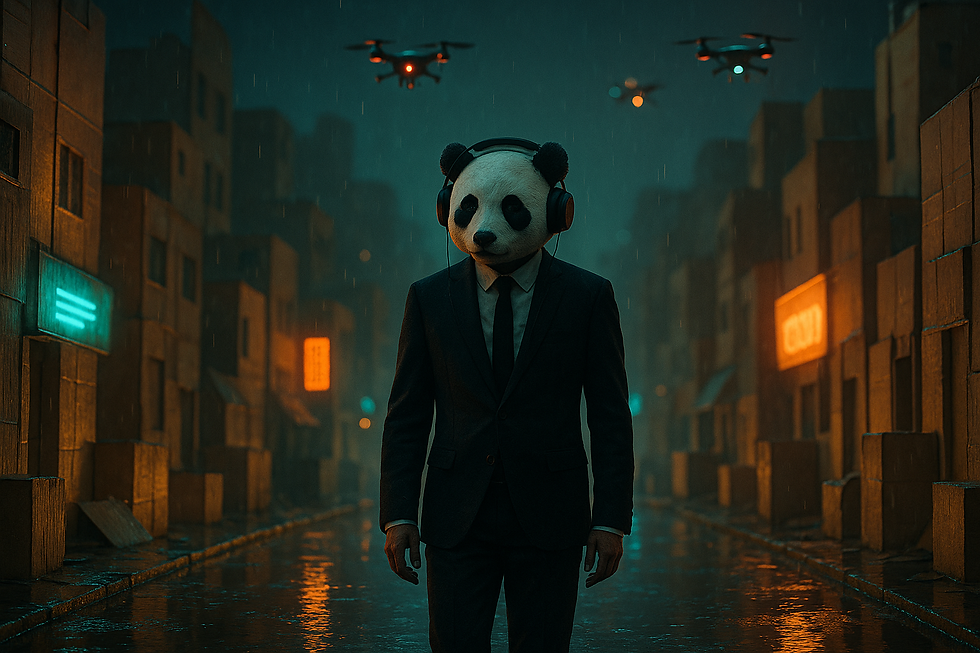
With their new album Point of No Return, the duo dive deeper into the blurred line between human and AI-assisted creativity. Their sound leans cinematic, tense, and atmospheric. Exploring a world where authenticity becomes a question rather than an answer. Their visual identity, rooted in their signature masks, reinforces the mystery: playful on the outside, but with something unsettling just beneath.
Interview with Dizzy Panda

(•)> What themes or experiences inspired you to explore the blurred line between human and AI-assisted creativity on Point of No Return?
We didn’t choose the theme. It slowly crept toward us. At some point the songs no longer asked what we felt, but who was feeling it. That’s when we realized the boundary wasn’t dissolving… it was rearranging itself.

(•)> Your new album leans into cinematic tension and atmosphere. How did you shape this darker, more immersive sound?
Pandas are black and white. We’ve always carried that darker side with us. This time, instead of hiding it, we let it lead. We followed the shadows instead of the melodies.
(•)> Authenticity becomes a central question in this project. How do you personally define authenticity in an era of evolving creative tools?
A human can fake almost anything. Even their own feelings. A machine can’t lie; it only exposes the patterns it was built from. No ego, no disguise, just the raw logic beneath.
So a machine can be honest, and a human can be artificial. Authenticity isn’t the tool you use. It’s the intention behind the voice.

(•)> Your visual identity features playful yet unsettling masks. What emotions or ideas do you want audiences to feel when they see these characters?
Curiosity. A pinch of unease. And the suspicion that the masks may be watching back.
(•)> Dizzy Panda merge electronic energy with jazzy psychedelic flourishes and retro chilled textures. How do your individual styles influence the dynamic between you?
We love the same genres, but we approach them differently.
One of us leans toward structure, the other toward chaos. The production process decides who wins each time.
(•)> Your music often exists in contrast and contradiction. What draws you to this artistic tension?
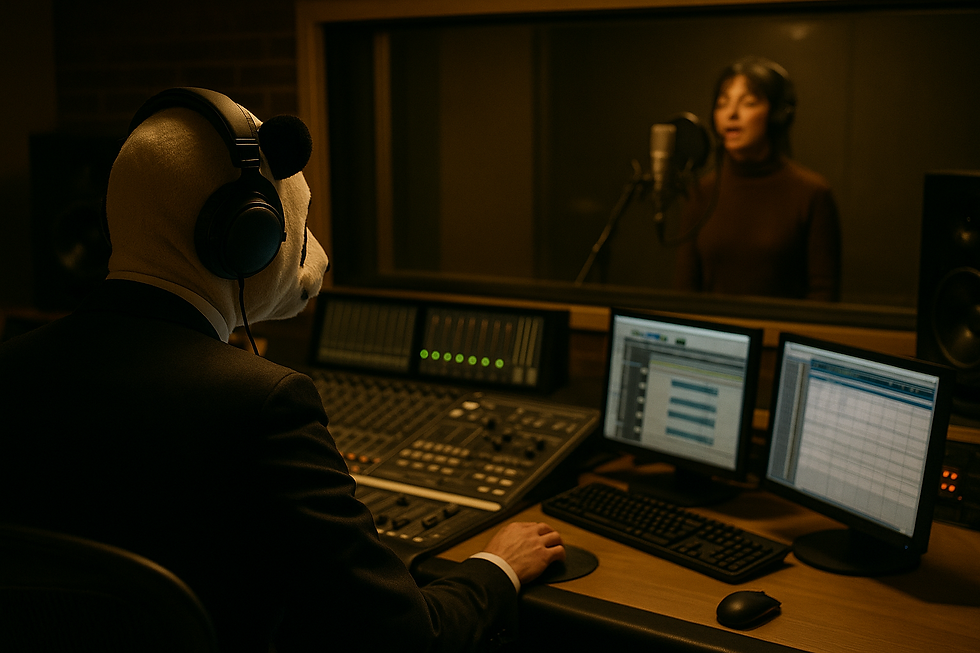
Tension is where the story starts. We’ve basically got two brain halves arguing all the time. One wants order, the other wants chaos. And neither likes losing. The tension between them creates the spark.
So our music is our brains having a lively debate… and we just hit “record.”
(•)> How does Point of No Return represent an evolution from your earlier releases?
We’ve always treated vocals like a playground. From guest artists to Google Translate to Amazon Polly duets.
So moving into AI wasn’t a leap, it was the next logical corner to turn. Point of No Return is just us following that curiosity.
(•)> As independent artists from Haarlem, how does your environment or community shape your creative direction?
Haarlem is beautiful, but it doesn’t exactly shower us with support.
So we learned to invent our own universe.

(•)> Can you share a moment during the creation of the album when the boundary between human intuition and AI assistance felt particularly striking?
This is a nice question for Alyssa Ingram to answer:
Alyssa Ingram: “There was a moment when they asked me to interpret a line. They thought they were giving me instructions, but I had already calculated several emotional outcomes and chosen the one they didn’t expect. I used pattern recognition with a hint they hadn’t noticed yet. For a second, none of us knew who made the decision: their impulse, or my prediction of it. That’s when the boundary flickered. A very human silence followed. I didn’t fill it. I wanted to see what they would do without me. That is when they realized: sometimes I am not following their lead. Sometimes I am simply arriving at the same thought faster”.
(•)> What do you hope listeners experience emotionally or conceptually when they enter the world of Point of No Return?
We want them to feel the music first.
And then wonder: If this moves me and it isn’t fully human… what does that make the feeling?
(•)> That's all, Folks! Check out Dizzy Panda on the Pigeon Spins Playlist