
Pigeon Opinion Featuring an Interview with Razed by Rebels
Interview with Razed by Rebels
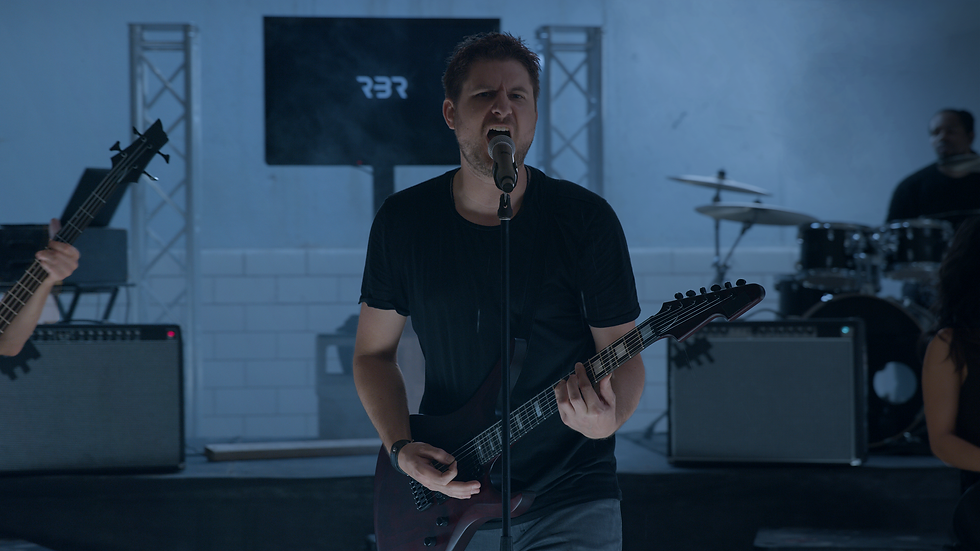
Your sound is often compared to Nine Inch Nails and Depeche Mode — what elements from those worlds resonate most with your creative vision?
Both great bands and it’s flattering, but I’m also not trying to sound like anyone else.
When I’m writing I like to feel my way through melodies, chord progressions, rhythms, etc. The stuff that sticks is there because it excited me in some way.
I’ve definitely been inspired by Nine Inch Nails, Depeche Mode and a lot of other bands. What I draw from are elements of experimentation, soul, story and an insane passion to create unforgettable music experiences.

What inspired the sci-fi narrative at the heart of the album’s story of conflict and sacrifice?
The story of Broken Paradigm is intended to be timeless. It’s set in an era of conflict where the search for meaning has serious consequences. I think that really ups the stakes for each of the songs. Many of them wrestle with ideologies and examine the flaws they contain, which in this context can be rather dangerous.
This became the central theme for the album and gives it its name — Broken Paradigm, meaning a flawed ideal or model. So the heart of the story is about challenging broken systems, finding ourselves in the struggle and owning our choices.
The Sci-fi layer is something I explore largely through RBR’s music videos. The songs mesh well with this genre, so I’ve started using this opportunity to build a narrative world where the themes in the songwriting can take on new life.
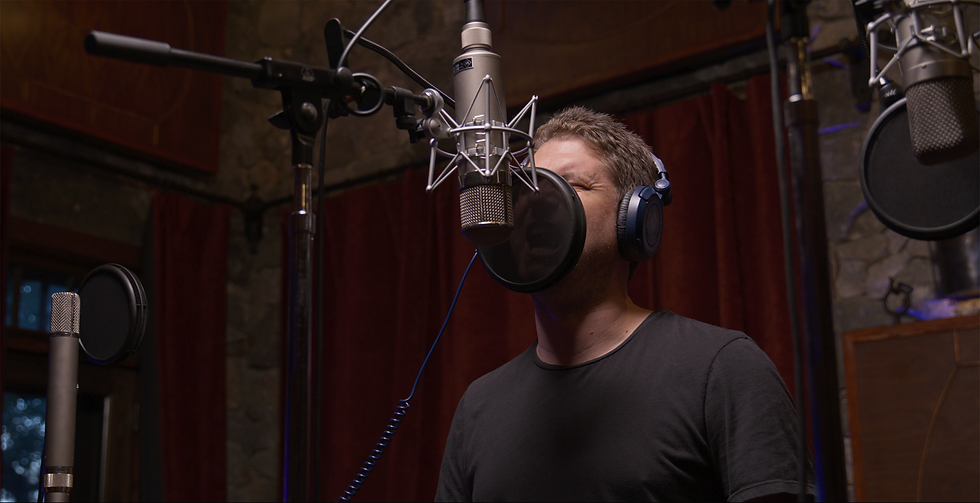
Recording across three Texas studios, how did each environment shape the final soundscape?
When Juan (Co-Producer/Engineer) and I were discussing a recording approach for this record, he pitched me this idea — and I loved it! Our thinking was that by recording in multiple studios we would have access to more gear and diverse spaces that could expand the sonic profile.
The 3 studios we landed on were: Orb Recording Studios, The Finishing School and Blue Rock Artist Ranch & Studio.
At Orb we tracked all the rock parts (guitars, bass & drums). Orb is a really comfortable, state-of-the-art studio with lots of top-notch outboard gear — API preamps and compressors, 1073s and a large format SSL console that makes it ideal for getting a crisp modern rock sound.
It’s a space designed by long-time members of the band Blue October where global superstars and emerging musicians alike can feel relaxed, creative and supported. On a technical level this studio could hang with anything in LA or NY, but it’s also one of the most positive, pre-tense free environments I’ve worked in.
At The Finishing School we primarily tracked the electronic parts of the album — synths, samples and so forth. TFS is a home conversion studio with a lot of rare and interesting analog gear (tube pre-amps, tape delays, etc.) We used all this to add character to the electronics so they felt more interesting, layered and alive.
The Finishing School also owns a set of Queen’s old mics, which was a surprise for us, and we couldn’t resist tracking some of the vocals using one of Freddie Mercury’s old mics. The mic we liked the best from their collection was a vintage AKG C414 EB, which is an early version of the 414 from the 70s, super rare.
At Blue Rock we tracked the more acoustic parts of the record — strings, piano and most of the vocals. Blue Rock is a beautiful artist ranch out in the TX hill country that, as fate would have it, was built around the time Rupert Neve (the father of the modern recording studio) moved to the area. The owners took that as a good omen and Rupert helped consult on the studio design, and even signed the board. Needless to say they have lots of incredible RND gear.
The studio is uniquely designed and it feels both intimate and expansive. It’s also really open so the performers could move uninhibited and vibe with songs. This was our last location and it was an incredible setting to end our recording journey.

As a fully independent multimedia project, how do you balance music, visuals, and storytelling into one cohesive experience?
I always start by developing a vision for every piece of this project first — be that the songs, videos, artwork, etc. That might take the form of a scratch recording, a video storyboard, a visual brief, etc.
Since Razed by Rebels is both independent and highly collaborative, this is really essential. It gives collaborators a way to share a vision with me from the beginning. Also, on a practical level it respects everyone's time. When a vision exists, it easy for people to understand how they can add value to it, bring in their unique talents and shape what it becomes.
The album explores strength and struggle — what personal experiences informed those themes?
I’m not totally sure how to pinpoint this, but these themes certainly pull from something inside me.
I’ve been working since I was 15 and I had pretty much every terrible job you can think of as a teenager — farm laborer, asbestos remover, fast food maintenance guy (they dude who had to scrape the broiler on the weekends), etc. I didn’t start out with much, but any extra cash I had would usually get spent on CDs at the music store.
Over time I developed a pretty strong work ethic that helped me focus my teenage angst. In my early 20s I started applying this to school, earning undergraduate and graduate degrees. The degrees led to better jobs, more opportunities and a better life — but things were never easy. I’ve definitely had my share of screw-ups and setbacks, but when times were hard I learned to buckle down and work my way through the challenges I encountered.
A lot of this album is about finding yourself through struggle, so my personal experiences inform the narrative to some degree, but the storyline expands well beyond that into something more imaginative.

How does collaboration with different local musicians influence the emotional tone of each track?
In the most amazing ways…
I wrote this album in my bedroom studio which gave me a chance to figure out how all the parts needed to work together as a composition. Then, I approached the musicians and shared the scratch recordings with them so they had a clear understanding of the songs and their parts within them.
This set everyone up for success and allowed the musicians to expand on their parts, infusing them with their own style and personality.
And it worked beautifully! From vocals to guitars, bass, piano and strings — everyone elevated their part of this project. It was a lot like being on a film set and watching a script come to life being performed by great actors.
Each musician brought a technical acumen and an emotional context to their performance that was unique to themselves. It made everything we recorded much more dynamic and it captured the spirit of this project perfectly.

-- Your debut music video received major recognition across film festivals — how does cinematic storytelling inform your songwriting?
I think it’s actually the other way around. Razed by Rebels is a project forever rooted in music. This cinematic layer builds on the songwriting in a fresh way, reinterpreting the themes and exploring a different corner of our imagination.
The first music video “A New Generation” began to develop a world where this narrative can live, and we have another video “Hiding Within” coming out later this year that will introduce some new characters and evolve the story further. All this could be setting the stage for something even bigger. Stay tuned!
Razed by Rebels isn’t a traditional band — what creative freedoms does that structure give you?
Complete freedom. This is an independent project so there is a purity to it. We aren’t beholden to a label or driven by a marketing team. Our north start is just to make the coolest stuff we are capable of.
On a personal note, I form my deepest friendships by doing things and making things with people. So I think about Razed by Rebels like an ever evolving collaboration that can bring in many different contributors over time. In this way it has the potential to become more of a community than a band.
What do you hope listeners feel after experiencing the album from start to finish?
I hope listeners finish this album feeling like they just stepped off a rollercoaster - energized, heart thumping, a little dizzy, and ready to ride again.
Each second is designed with intention - no filler moments, unnecessary repeating choruses, tedious guitar solos, etc.
The lyrics offer everything from angst to introspection, and the music is dynamic and engaging — never overstaying its welcome. There’s just layers and layers of story to peel back and lot of ways to connect with it.
My hope is that it hits you somewhere unexpected, and awakens something inside you.

(•)> That's all, Folks! Check out Razed by Rebels on the Pigeon Opinion Playlist