
Pigeon Opinion Featuring an Interview with Anatomy of the Heads
- Apr 8
- 8 min read
Interview with Anatomy of the Heads

What inspired the concept behind the 2nd Expanded Edition of Unholy Spirits Light Divine and its “Tropical Dread” aesthetic?
When Unholy Spirits Light Divine first slithered into the world in 2021, it felt like we were performing for an audience of approximately ten people—most of whom were probably just checking their watches. Despite the vanity of a dedicated cassette release, the album went largely unnoticed by the masses, remaining a "secret handshake" hit within our immediate circle of shut-ins. We eventually realized that cranking out music at a relentless, self-imposed six-month clip was less of a "prolific creative streak" and more of a fast track to burnout that killed any hope for genuine immersion. So, we decided to stop acting like a content mill and actually treat our art with some modicum of respect. The concept for the 2nd Expanded Edition was born from a simple "what if": instead of burying new material under a lack of effort, why not take what we’ve built and actually do it right? We exhumed a bonus track we’d originally hacked off for the sake of runtime, slapped together a zine and a shirt, and leaned heavily into the "Tropical Dread" aesthetic—essentially reimagining the record as a luxury postcard from a vacation spot that’s actively haunted. We let it rip just to see if the world would notice when we actually bothered to show up, and it turns out that "Island Horror" sells a lot better when you aren't sprinting toward the next release before the listeners have even finished their first drink.

How did you blend mid-century lounge, vampiric ambient, and dungeon synth into a cohesive sonic experience?
Well, it certainly was a process. After our standard approach of guitars and drums failed to produce anything but mediocre noise. We eventually stopped trying to be a "band" and started acting like deranged set designers. I went through the absolute theater of building a custom violin and teaching myself to play it just to find a sound that didn't feel borrowed. We layered in synths to flesh out the textures. That is the true spirit of Exotica: there are no rules, only the fantasy. If you’re a bassist who feels the sudden, inexplicable urge to assault a pair of bongos to make the atmosphere "pop," you do it. And we are very pleased with the results. It’s far too noisy to be a classical record, way too melodic to qualify as ambient, and possesses far too much structural integrity to be "noise." We even managed to offend the dungeon synth purists by being too "sensible." It’s a strange, mutated hybrid that lives in the cracks between genres. We’re immensely proud of it, mostly because it defies the urge to be any one thing, opting instead to be everything at once while staring you down from a dark corner of the tiki bar.

Can you describe your approach to using lo-fi textures and historical noise as a deliberate artistic choice?
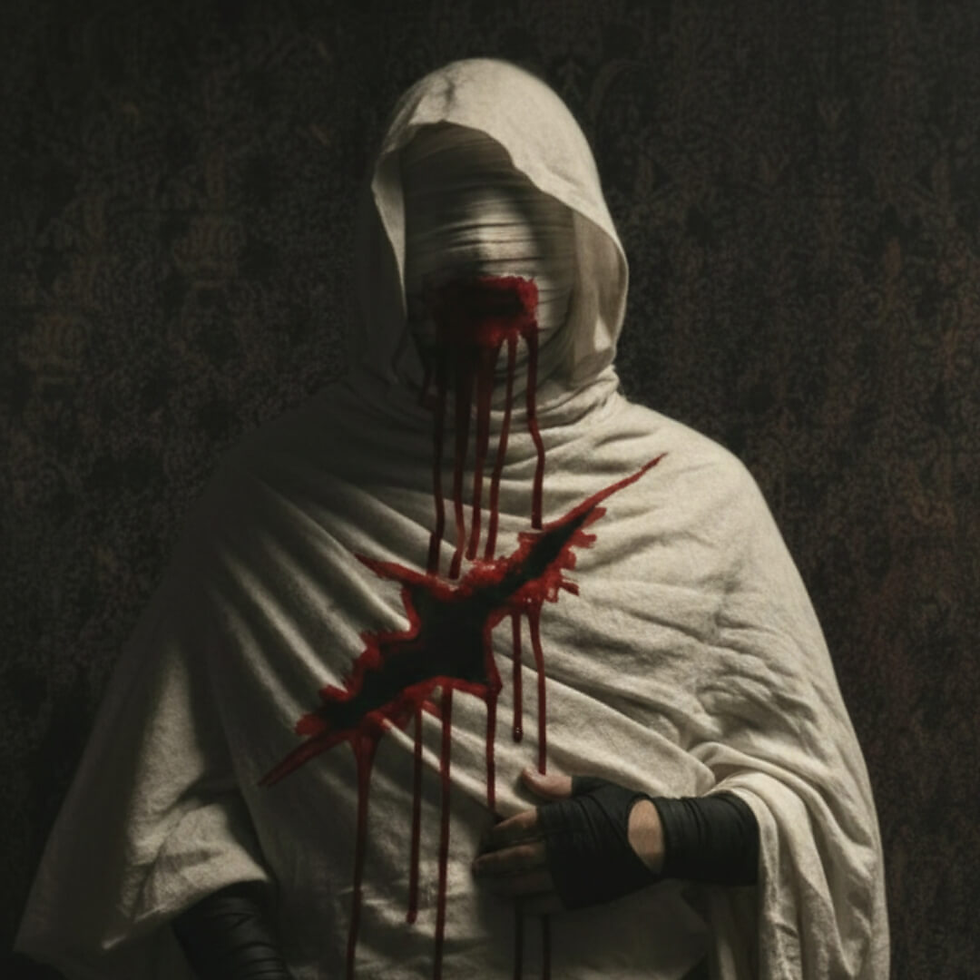
We’ve always been obsessed with a very specific brand of lo-fi sound. Black metal is the only genre that gets the "vibe-to-talent" ratio correct—the production value does about 90% of the heavy lifting. Our goal was to capture that exact sense of sound but subtract the actual metal parts, and on this record, the results are quite pleasing. Think of it as the antithesis of a Phil Collins album. When you put on Phil, he’s right there in your living room, practically begging for your approval with every drum fill. He’s playing for you, the engaged listener, and it’s frankly a bit needy. Unholy Spirits Light Divine, on the other hand, sounds like something you were never supposed to hear in the first place. The musicians aren’t performing for a record or an audience. We wanted the whole thing to feel like a clandestine recording operation—less "studio session" and more "some creep hiding behind a palm tree with a handheld tape recorder, secretly documenting a ritual he doesn't understand." It’s a deliberate choice to make the listener feel like an intruder in a private moment, ensuring that the production acts as a thick judgmental veil between the performance and your unworthy ears.
What role does immersive world-building play in your music, and how do you create that for listeners?
Since most of our music is instrumental, we’ve essentially outsourced the hard labor to the listener’s own brain. We view world-building as a high-stakes game of psychological manipulation: we provide just enough sensory bait—the artwork, the cryptic song titles, the pretentious album names—to spark an image, then we step back and let your imagination do the heavy lifting. It’s about giving you enough stimulation to feel something, but not enough to give it all away. We start with the basics, then layer in liner notes, promotional propaganda, and various "clues" scattered across our supplementary materials like digital breadcrumbs. The goal is to draw you into a recursive loop of obsession, luring you deeper and deeper into the thicket until you’ve handed over every cent of your disposable income. Ideally, the process ends with you living under a bridge, shivering over a portable speaker, binge-listening to Anatomy of the Heads while desperately trying to crack a code that doesn't actually exist.
How do you balance the kitschy, exotica-inspired jazz fusion elements with darker, more experimental sounds?
Exotica is essentially the musical equivalent of a venus flytrap—it looks inviting and colorful, but if you actually pay attention, you’re already being digested. People tend to view the genre as harmless background muzak for sipping a Mai Tai, but that’s only because most composers kept a lid on the insanity just enough to maintain "lounge accessibility." If you listen to records like Les Baxter’s The Passions or any Yma Sumac record, you’ll find a deranged landscape of ecstatic moaning, dissonant chords, and general sonic weirdness that is on par with most modern "experimental" music. And the connection goes much deeper; many early Exotica pioneers were quietly obsessed with the emerging avant-garde and musique concrète. They were smuggling high-level sonic experimentation, primitive sound effects, and disorienting stereo panning into suburban living rooms under the guise of "tropical travelogues." I’m certainly not the first to stumble onto this—Boyd Rice of NON was pointing out the inherent darkness and noise buried in these records decades ago. The experimentalism and mystery have always been there, lurking behind the bamboo curtains. We aren't "adding" darkness to the genre; we’re just removing the boring commitment to being "elevator music" so the latent horror can finally breathe.

In what ways does your music draw from Kiribati culture or personal experiences from the Pacific?
Well, I am enchanted by the dark corners of the earth; a morbid obsession with remote, isolated locales and the secrets they bury. Unholy Spirits Light Divine, for instance, is underpinned by a dense philosophy of theological monism—as hinted at, with agonizing vagueness, by the title itself—which borrows heavily from South East Asian Sufism and occultism. If you’re actually looking for the "why," you can go dig through our YouTube channel or Substack, where we spill far more words on this than any sane person should. It’s all there to prove that we aren't just making noise; we’re constructing an elaborate, multi-layered trap of cultural references and metaphysical dread. If you want a geography lesson, go to a library; if you want to feel the existential weight of a sinking atoll while contemplating the void, stick with us.
How do you approach each release as a self-contained universe or “different locked room in a rapidly burning building”?
Every release begins with a single, shiny idea that at least I must find fascinating—usually something just weird enough to ruin a dinner party—and from there, it’s a grueling descent into development, development, and more development. We have this unspoken, perhaps pathological commitment to maximalism, mostly because minimalism has become the ultimate refuge for the creatively bankrupt. There are already a million ambient albums out there titled things like "Silence," "Wave," or "Beach," produced by some guy who thinks pressing one key on a synth and refusing to elaborate constitutes an artistic statement. I mean, call me thrilled—what a show! We prefer the "locked room in a burning building" approach because it forces us to cram every bit of conceptual furniture into the space before the roof collapses. We aren't interested in providing a nice, empty room for you to meditate in; we want to build a dense, suffocating universe where every corner is stuffed with musical and conceptual clutter. It’s about more-is-more, because "less is more" is just a polite way of saying you ran out of ideas. If you’re looking for a sparse, meditative soundscape to help you sleep, you’re in the wrong burning building.
Can you explain the humor and theatricality in your band persona and how it interacts with your music?
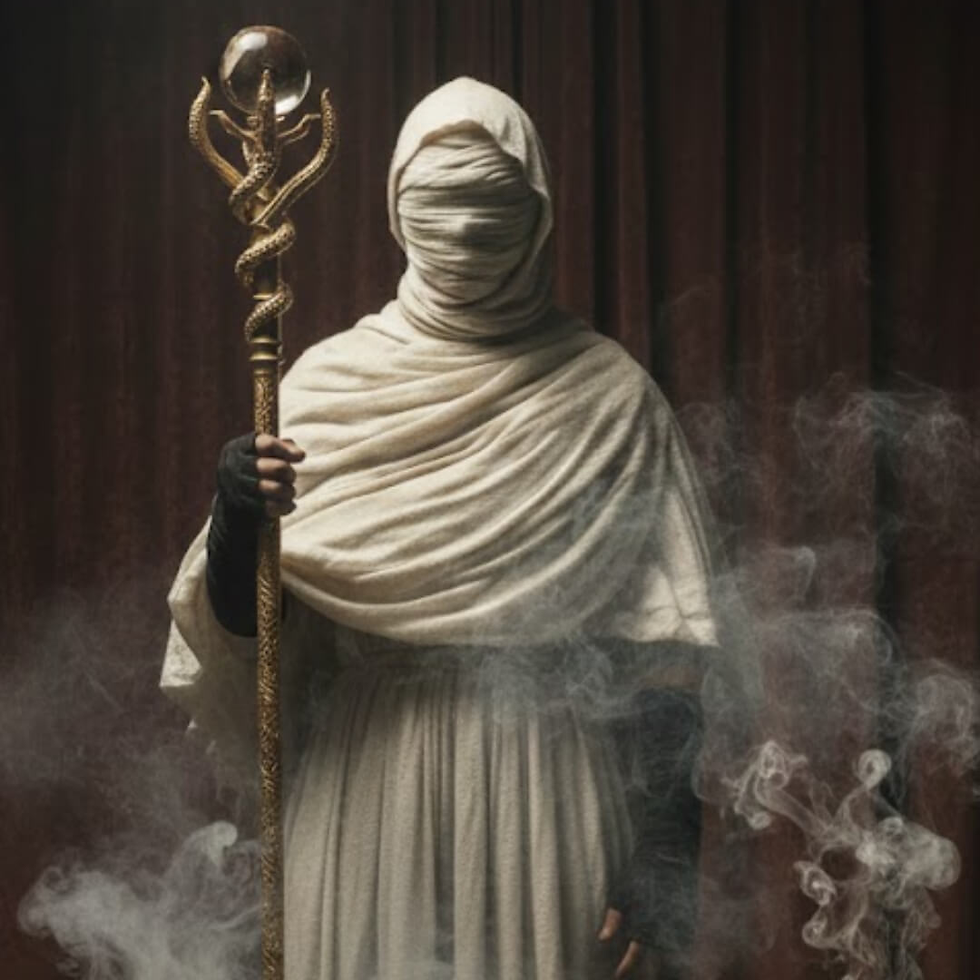
Unfortunately, I’ve been forced into the role of the band’s designated mouthpiece because my two collaborators are far too busy being "authentically inaccessible." They seem to operate under the delusion that any form of promotional activity—or, heaven forbid, talking—might somehow tarnish their non-existent status as underground rockstars. It’s that same tired, stereotypical ambient-guy routine: refusing to elaborate on anything in a desperate attempt to cultivate an "aura of mystique." Honestly, what a bore. If you leave the talking to me, you’re going to get a healthy dose of absurd humor and theatricality, mostly to compensate for the stony silence coming from the other side of the room. The other two could chime in if they really wanted to—they’ve managed it once or twice in the past before retreating back into the shadows—but they don't. I’ve decided to take their lack of participation as a glowing endorsement that I’m doing everything exactly right. If the music is going to be a clandestine recording, me clowning it up keeps us from becoming a total pretentious fest.
How do field recordings and unconventional sound sources shape the atmosphere of your releases?
It’s all about being an observer who refuses to mind their own business. In the modern age, being a prolific "recording artist" basically only requires the ability to stand still with a smartphone and not look like a total fed. Since everyone walks around with a high-fidelity wiretap in their pocket, capturing the symphony of daily life has never been easier. This is especially true in the Pacific, which is a literal goldmine for field recordings. Whether it’s someone singing because they’re bored, localized musical snippets drifting out of a window, or just the ambient rustle of a world that hasn't been completely sanitized by urban planning—something is always happening. You can basically stumble into a masterpiece just by being an eavesdropper with an expensive microphone. Old horror movies are a good source too. They have those histrionic, grainy textures that you just can't replicate in a clean studio environment. By blending the lived-in sounds of a Pacific afternoon with the canned terror of a mid-century B-movie, we create records that feel less like polished albums and more like stolen audio logs from a civilization that’s currently falling apart.
What’s the creative process like when mixing genres like dungeon synth, black metal, harsh and soft noise, and jazz fusion in one project?
We’ve learned that the only way to successfully get along is to keep the room very, very small. We rarely record as a whole band. Rather it is just me and one person at a time adding their specific flavor to the pile, over and over again until we’re collectively satisfied. That is how the basement-dwelling vibes of dungeon synth and black metal end up right next to the "I-actually-know-music-theory" pretension of jazz fusion. By keeping the recording intimate, and solitary—it keeps the whole affair introspective and surprisingly focused, allowing each member's worst impulses to be tempered by the next person's contribution. Frankly, we have to work this way because if we ever tried to record as a live, functioning band, we’d immediately devolve into the worst version of Poison or Mötley Crüe. It would become a pathetic, high-volume pissing match to see who has the biggest guitar and ego.
(•)> That's all, Folks! Check out Anatomy of the Heads on the Pigeon Opinion Playlist