
L.R. Shelton Builds Rock Legacy Co. Into a Home for Classic Rock Preservation and Reinvention
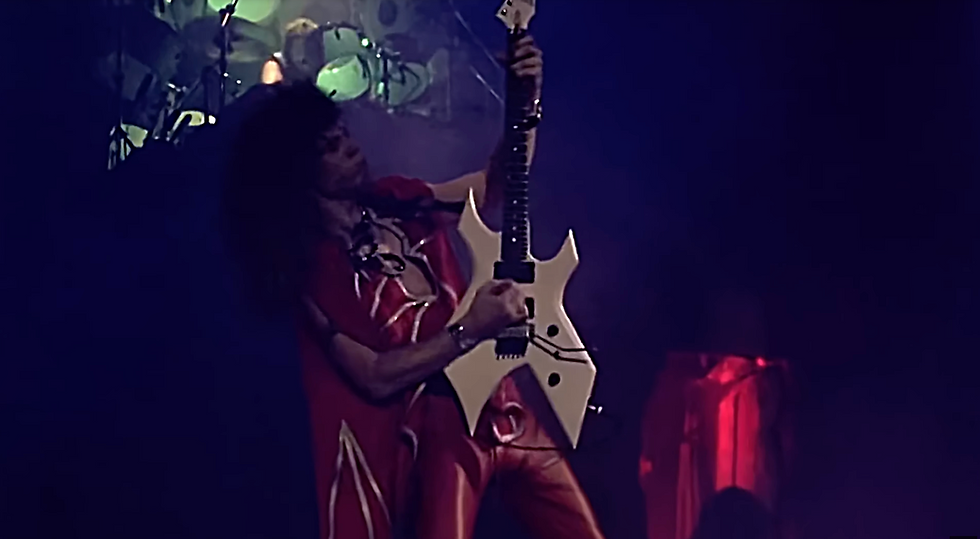
Through Rock Legacy Co., L.R. Shelton is preserving the spirit of classic rock while pushing it into new territory, blending restoration, collaboration, and modern production into a project built on respect for rock history and the people who shaped it.
Rock Legacy Co. is built on preservation, passion, and respect for rock history. Through restoration work, collaborations, and a clear love for classic songwriting and performance, L.R. Shelton creates a project that feels rooted in tradition without simply recreating the past. Rock Legacy Co. focuses on authenticity, raw musicianship, and the emotional weight that made classic rock endure in the first place. The result is a project that feels archival in spirit but still creatively alive.
Interview with L.R. Shelton on Rock Legacy Co.

What originally pushed you to start Rock Legacy Co.?
I started Rock Legacy Co. after watching the documentary “The Decline of Western Civilization: The Metal Years” and my mind was completely blown. I was watching heavy metal footage from the 1980s in crisp high definition. I had never seen that era look so clear before and I must have watched it ten times or more last year right before I got started. I started in September of 2026 and worked 12 hours a day learning audio engineering, Color grading, davinci resolve, and dehancer pro which is what professional filmmakers use, all in about 3 - 4 months. I love learning and it is addicting to me.
My independent career was inspired by two main people who get me going every day, which are my dad and Randy Rhoads. I was always interested in heavy music after being introduced to Black Sabbath when I was in the fourth or fifth grade, but everything changed when my father took me to see Van Halen live in 2008. The rest was history as far as my creative path went because I immediately started taking guitar lessons, then eventually leading to this. Randy Rhoads has been my ultimate guitar hero since my junior year in high school when I bought the Tribute album. I listened to that entire live record and specifically the Children of the Grave solo asked myself, “What the blank was that?” Both of those men are my main inspirations and drive my creative career forward every single day.
Was the goal always preservation, or did the project evolve into something bigger creatively?
My goal from the beginning was to try and make rock and metal more accessible to any crowd interested in viewing and listening to this era. Rock and roll is for everyone no matter who they are. Anyone is invited to this project, especially new listeners and people who normally stick to other genres but have never given heavy music a chance. I want it to be open to anyone with an open mind. If I can create content for the newer generation that relates to modern post production sound and visuals, allowing them to enjoy these versions better, then I do not see anything wrong with reproducing the content. Interestingly, there is data from Spotify showing that 50% of people under the age of 25 are now actively listening to heavy metal. Other studies show the younger generation is turning back to rock music, and it would be an absolute honor if I could help carry that torch.

Rock Legacy Co. feels rooted in classic rock culture without becoming trapped in nostalgia. How do you balance respect for the past with forward movement?
I have actually heard professionals discuss my work and they note that I have a natural ability for sound and visual quality. I elevate it to the point where it becomes enticing and leaves the viewer wanting more. I do not do a lot of changes to the original instrumental tone, such as the guitar tracks, but I enhance the overall sound quality manually using DaVinci Resolve audio tools. My workflow includes an EQ, a multiband compressor, a dynamics rack, a vocal channel, reverb, and distortion tools. I will say the multiband compressor is my absolute pride and joy, and the dynamics rack gives the track a much needed lift.
As far as the visuals, I convert the footage to a 35 millimeter film setting to give it a classic look. I utilize film emulation, halation, bloom, and gate weave, and then I select the right professional film settings for the film emulation using Dehancer Pro, switching between Kodak or Fujicolor depending on the original footage and original color tones. My father told me I had a gift for this and this project is the best way I could use it since it all came naturally to me.
What draws you most toward restoring or revisiting legacy material?
One thing I want people to know is that I am a massive fan of these remasters myself and I have always wanted to see this footage upgraded. I had a deep yearning to hear these videos with the best audio quality up to 2026 standards. I embarrassingly admit that I rewatch my own videos all the time simply because I am a fan of the music. Ultimately, the heart of this project lies with the rock and metal community. We are among the most passionate, knowledgeable, and dedicated fans in the world. We are capable of reciting band members, release years, and historical trivia at a moment’s notice. This project is a cycle because it starts with my own perspective as a fan, and it is curated entirely to be returned right back to the fans. As Ozzy Osbourne famously said, “Rock n’ roll is for the people.” He was exactly right, and it is a privilege to play a small part in preserving that legacy for all of us.

How important is authenticity when working with music tied to rock history?
Handling this music feels like a huge responsibility because it is tied so deeply to rock history. I have to make sure everything is as perfect as it can possibly be. I still make mistakes because I am still learning every day. Authenticity is extremely important since the literal legends of rock music are now watching my work. I go into every single remaster for the fans first, and then for the musicians who built the industry. As I get more well known in the rock community, the pressure builds on me to get it right. I absolutely love the challenge though because there is nothing else I would rather do in this life, and I want to do this until I die.
A lot of modern rock production feels overly polished. Was keeping a human, raw edge important to the identity of the project?
When it comes to the production style, I like to keep a middle ground. I create a mix that is half old school and half new age during the audio remastering process. In the mixing world they call this the New York style. I do a 75% wet dry compression mix which is what gives it that classic parallel compression punch. It is crucial to keep some of the old sound for authenticity because it preserves the original footprint of the recording while incorporating a modern 2026 hearing feel.

What have you learned creatively from working around musicians and material connected to rock’s earlier eras?
I have learned that most people in the rock business will welcome the little man with open arms. Legendary bassist Rudy Sarzo accepted me and my work immediately. Craig Goldy of Dio was also incredibly open to my work, even telling me, “If you think you are not good now, I cannot wait to see until you are.” He also said, “You have a gift my friend.” These interactions were surprising to me because I did not realize industry veterans would be so welcoming to an unknown creator like me.
Through this process, I have also learned that once the audio has been remastered to the best of my ability, I can appreciate that era of rock and metal even more. I personally got emotional several times on different remasters because of how beautiful the new audio versions turned out. I hope this has the exact same effect on fans of my channel. I always emphasize that people should try to use the best audio system or headphones possible for the best results. Hearing old audio transformed into something fresh is what drives this passion and keeps me learning.
Do you see Rock Legacy Co. more as an archival mission, a creative platform, or both equally?
I see it mainly as an archival mission for now, but the ultimate dream is to turn it into a full production house with employees covering all rock and metal subgenres. I almost started a podcast and even have one episode up on my channel, but I stepped back because I needed to focus entirely on honing my craft for the full audio and video remasters. In the future, it would be amazing to host an official podcast, conduct exclusive interviews, run a news blog, and offer much more under the Rock Legacy Co. brand.

What do you think modern artists misunderstand most about classic rock music and culture?
I think modern digital production focuses way too much on the absolute perfection of sound while eliminating all the rawness within the mix. In my opinion, this is exactly what separates classic rock fans from fans of the new digital era. It is beautiful to listen to a recording and hear the authenticity of minor mistakes or imperfect nuances. The slight rush of adrenaline entering a chorus, a guitar solo bleeding into the drum microphones, or a raw vocal strain are exactly what gave the old music its soul and identity. When people say they miss the soul of music, those exact human flaws are what they are missing.
On the cultural side of things, some people still view hard rock and metal as satanic or filled with evil intentions. For most bands, this could not be further from the truth. In fact, bands like Black Sabbath have historically given warnings against evil, warned about the dangers of drug use, and wrote heavy anti war songs preaching that the world would be a better place if we tried to live in harmony. People need to understand that the dark imagery is all for show and entertainment. It is the exact same thing for people who love horror movies. It is not real, and it is all done for the adrenaline, the aesthetic, and the fun.
What does Rock Legacy Co. ultimately represent for you right now?
Right now, Rock Legacy Co. represents a mission to give the best experience possible to the fans who have listened for multiple generations, as well as the new generation coming up. It is my main purpose to keep this music alive. There have been multiple occasions where a fan was in dire need of comfort and my remasters made their day better. To give you a powerful example, one fan’s little brother had just passed away from cancer and the song “We Die Young” by Alice in Chains helped them connect with their grief and cope better. Reasons like that provide a true purpose for the people who need it most.
This project is also a tribute to the musicians and legacy heroes who built the rock movement from the 1970s through the 1990s. Craig Goldy of Dio was ecstatic to see my “Rainbow in the Dark” remaster. The fact that he was blown away by the visuals and sound makes me feel completely honored that these legends even give me the time of day. I cannot tell you how ecstatic I feel that they approve of my work, and it has definitely made me emotional on several occasions.
I also got to do a very special remaster for the son of UFO guitarist Paul Chapman. Paul passed away a few years ago and his son requested that I remaster a video of his dad. It is one of the most honorable projects I have done so far. This reason alone is why Rock Legacy Co. will not be going away anytime soon. Rock and roll is truly for the people, and it is a complete honor to give this service back to the global rock community.
To support Rock Legacy Co. you can subscribe to my youtube channel Rock.Legacy.C0. my twitter @TheMetalVault8 and my instagram Rock.Legacy.Co.Official. And my Ko - Fi account for financial support since I have made no money on any remaster and my project is in a net deficit. ko-fi.com/lrshelton52961
