
Interview with Henry Mansfield
- Aug 6
- 10 min read
Henry Mansfield's latest single is a vibrant reminder that the best indie pop can be both irresistibly catchy and emotionally perceptive. Wrapped in glittering synths, explosive drums, and an instantly memorable hook, the track radiates summer energy and escapism.
Mansfield uses the infectious production to explore the complexities of modern connection with wit and a distinctly queer perspective. Its emotional curiosity shines through every chorus. That combination reflects the strengths Mansfield has developed throughout his career.
Theatrical arrangements, and an instinct for writing songs that invite audiences to sing along while thinking more deeply about themselves. This is joyful therapy-pop at its finest!
Interview with Henry Mansfield
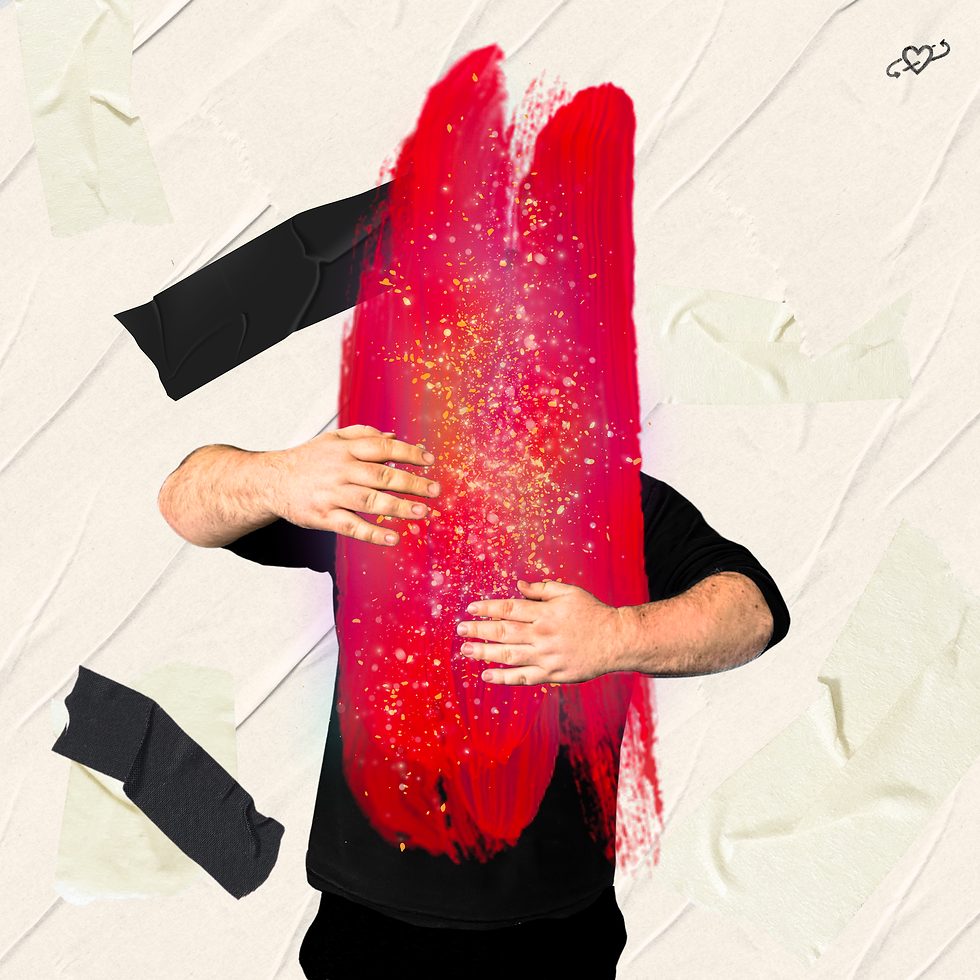
You call this “queer therapy-pop.” What does “therapy” actually look like for you when you’re writing a song?
I think both therapy and songwriting can involve an attempt to articulate something carefully and deliberately! I get a lot out of talk therapy because I feel like someone’s letting me loose into a room with all my feelings, and my feelings are colorful butterflies that are flying around but I’ve been given a big net, and I just have to catch the butterflies and then someone will tell me what each one is. It’s a process of self-discovery every time, and I have a lot of fun usually, even if it’s emotionally intense and exhausting work. In a similar way, sometimes a song is just a net for a feeling, so you can hold that feeling in your hand and repeat it to yourself. It makes the feeling soft to the touch and definable — it has shape now. So I guess there’s a similar mindfulness to both, along with a process of articulation. It’s word puzzling to find which phrase might best represent the thing you’re trying to communicate. I love therapy and I love songwriting.
This track is described as a “song of the summer” with emotional intelligence. What separates a throwaway summer anthem from one with lasting weight?
This is such a good question. I can’t speak to what the broader culture of music consumers deem lasting vs. throwaway, but for me personally, so much of it comes down to the melody. Some melodies, the first time you hear them, they’re immediately iconic because you feel like you’ve been listening to that melody your whole life, even though it’s actually the first time you’ve heard it. Those melodies are SO hard to write, and when you get one as a songwriter it feels like such a gift. There’s some tricks that can get you there, or at least put you within a few nautical miles, but usually it’s just some serendipitous alchemy that falls out of you all at once. When I think of all the “songs of the summer” that have lasted, I think of songs with fantastic melodies and an incredible sense of musical identity. The chorus of Mr. Brightside. Rihanna’s Umbrella. Call Me Maybe. I think Good Luck Babe by Chappell Roan has the most unbelievable chorus I’ve heard in years. Who knows if everyone will be talking about these things in another decade, but I know I’ll be listening.
Your sound mixes glittering synths, horns, piano, and big drums. How do you keep that maximalism emotionally focused rather than chaotic?
I find a lot of maximalism DEEPLY moving — the kind of sounds so large and in such quantity you kind of just have to surrender to them. It provokes a kind of mindfulness in me. When I’m writing, I’ve had to reel myself back in sometimes from just putting every single idea I like at once. LOVER BOY is actually one of my most restrained releases yet in that regard, and that was by design. But again, I think it all goes back to the melody. I’d argue literally nothing else matters in your song if the melody is bad or unmemorable. The right melody with the right words over the right harmony can make people overlook the quirkiest instrumental or the weirdest phrasing. IN THE AEROPLANE OVER THE SEA is such a great example of this. I know that album gets a reputation online, and some of it is deserved, but it’s a masterclass in pop melody songwriting from one of the weirdest bands of all time. Every song has at least one immediately memorable and singable melody, and I think that’s why so many people (myself included) find it so emotional and iconic.
For me, melody is the thing everything else hangs on, which is hard sometimes, because I don’t often feel like I’m a good melody writer. No matter what the instruments are doing in the song, I’m always trying to make the thing I’m singing feel accessible and also singable by a room full of people. The rest of the instruments are theater and set dressing, they define the world you’re in, but if my song isn’t emotionally clear with just a piano/guitar and my voice, then it certainly won’t stand up with a full band.
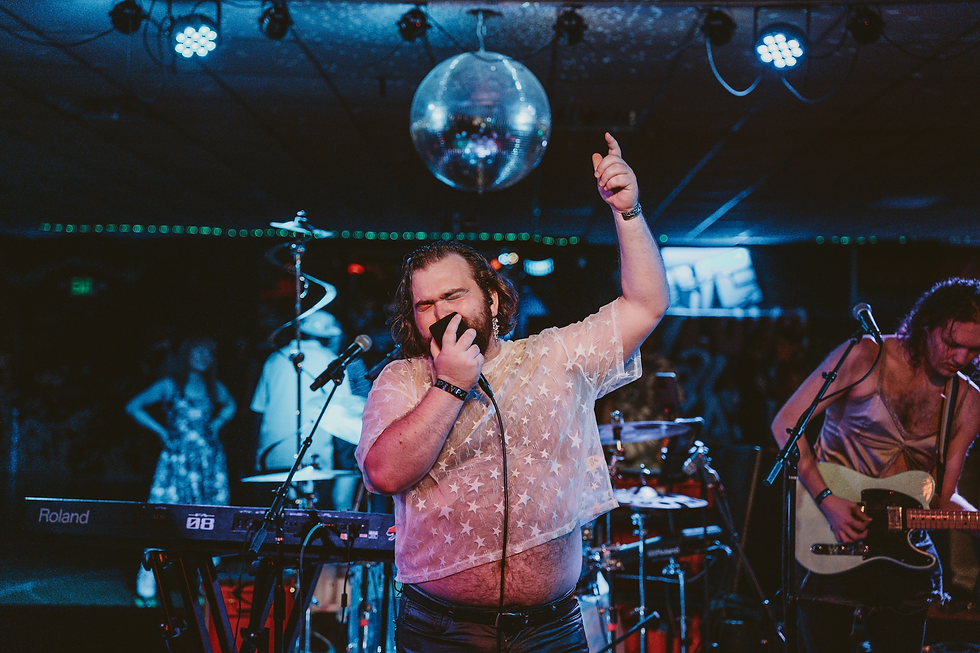
You often explore grief and joy in modern connection. Do you see those as opposites, or as two sides of the same emotional experience?
I’m a big fan of defining joy as something that happens after grief. Happiness, pleasure, all of those things can be experienced at any time, but joy — to me at least — is trickier. Joy and melancholy have a similar flavor to me, that kind of gratefulness to be alive that only comes from the knowledge of your own mortality. A lot of my favorite works are things that carefully create access to those deeper feelings for you. Comedies that swing into well-written drama hit me way harder than regular dramas do, just because my heart has been opened and I’ve been entertained and that makes me more willing to attach and be vulnerable, so the swing into real emotion can get to my heart that much quicker.
There is so much grief right now, and we’re exposed to it constantly. It feels like everyone I talk to is carrying something heavy. And on one hand, you want to engage people with that. You want to write the song that allows them to approach that safely, to let their grief out. At the same time, I don’t do well with artists that just double down on the weight of everything. I need to be reminded of why I’m here before you remind me why it’s so hard being here sometimes. We need both, and I love when a skilled performer can lead me through the grief and joy in a way that allows me to safely access what I’m feeling. It’s something I’m still learning to do as a creator.
Your lyrics are described as having an “intelligent through-line.” Do you write from concept first, or do those ideas reveal themselves after the music starts?
It totally depends! I think the songs of mine that I like the most are the ones I kind of found my thesis as I wrote them, and the whole song is a process in interrogating an idea until I find something worthy to make a chorus about. LOVER BOY was not like that. There’s another song — TURN on my last record — that was my attempt to write in the voice of someone who had been deeply, deeply frustrated with me. That song resonated with a lot of people, and I’d always wanted to try that again. LOVER BOY came out of that impulse. I had just finished a boatload of therapy after a relationship and was digging deep into the ways I had failed and the ways I gave myself away to be loved, and I realized how many people I knew had either been in relationships with that type of person OR had been that person in the relationship! I’m talking about the people-pleasing anxious attachers (raising my own hand here) who don’t have enough of a secure attachment to themselves so they seek it out constantly in others, usually resulting a string of unsatisfying or traumatizing relationships. I wanted to dig into that phenomenon, but I knew that a song just listing therapy buzzwords over piano would probably not go over well. I’m a huge Chappell Roan fan, and I think in a lot of pop music there’s a very fun trend of campy character assassination of idiot men. So I set out to split the difference — how can I make a fun queer synth bop that mocks this trope while also treating it seriously, and offering a path towards progress? I don’t believe in criticizing people who haven’t been offered the tools to better themselves.

Your live shows are known for being interactive and high-energy. How do you translate vulnerable emotional themes into a collective, celebratory space?
It’s such a delicate balance. I think a lot of it comes back to what I was talking about a few questions above — how do you create the circumstances for emotional vulnerability in a room full of strangers? A well-defined world always helps, especially when people can be a part of it. I love theming shows for that reason. We do a “winter prom” every December and I think that kind of pageantry allows people to step outside the usual just enough to be open to something new. It’s playful and fun, which usually disarms people just enough to move into something emotional.
I think the right kind of show doesn’t demand things from people, but it asks and has done the work to make people willing. Sometimes, too, you have to model vulnerability first. If I'm willing to stand onstage and talk about grief or loneliness, it gives other people permission to access those feelings.
So first, shows have to be fun or entertaining. Then, I think you can make a play at being a visible human who grieves, who hurts, who is missing someone, and that allows other people to hopefully access those things. And after all that, comes the true joy of the set, where you’ve accessed both sides of the fence and that grief informs your ability to engage emotionally with the hopefully cathartic finale.
At he success of NOTHING BUT THE MYTHS WE MAKE, did you feel pressure to evolve your sound—or freedom to expand it?
MYTHS was such a fun playground for me to expand my sound. I got really interested in using genre as a storytelling element, using pop song structures as an actual part of the themes of the record. I think as a byproduct, a lot more people gained access to my music, which is really cool! More or less everything since then (RACCOON, BEND YOUR KNEES, and now LOVER BOY) has been an offshoot of that process, trying to wrap pop songs around thorny things. Part of the thesis of Myths is that real life rarely gives you a chorus or a satisfying ending, and you can’t really go home again, and so there’s a part of me that really struggles to write pop songs because it feels so emotionally dishonest. I always want to write in a straight line and you can’t do that in pop songs. So I’m doing my best to use genre tools to comment on real life, which is really difficult for me, but I think the results are always worth it. I know the pendulum will swing way back the other direction sometime, but right now, while I’m building an audience, I’m happy focusing on making music that allows people into the world.
Winning the Doc Swinson’s Opening Act Contest out of 200+ bands is a big validation moment. Did that shift how you see your role in the Seattle scene?
Winning that competition was incredible, and we are so lucky to be working with Doc Swinson’s and the TuneUp crew this summer. Did it shift how I saw myself? Maybe for a day or two. Institution validation is such a high. It certainly felt good to tell some people who are skeptical of my ability to succeed as a musician. But eventually, you’re still you, and you go back to paying your bills and doing your dishes. I think I’m doing a lot of work to separate my sense of self-worth from my accomplishments as an artist, especially because the coin almost always flips. I’ve talked to so many friends in the industry, some far more successful than me, and there’s this well-defined phenomenon of playing a massive festival and then going back to being a barista, or getting a prestigious award and then not being able to make rent the next week. Being an artist means, for most of us, being broke and always chasing some source of validation. And so much of our outcomes are based on luck. I’m grateful that contest put my name in more people’s mouths, but I don’t want to base my identity on being a winner of something.

Your work is described as loud, queer, and anthemic. How intentional is that identity in your writing, versus something that naturally comes through?
I’m a little soft feelings-forward sensitive guy, so I think the aesthetics that have always made me emotional are always big, soaring anthems. I always love exploring new ways of eliciting emotion but ultimately if you play me anything with big drums, chiming lead guitars and soaring vocals, it’ll probably make me a little misty-eyed.
The queerness is an interesting one. For a long time, I was deeply disappointed by the genre aesthetics of queer music — a lot of it didn’t move me. I’ve come to appreciate it a lot more lately, and synths and drum machines pepper throughout my music, but I think my music is more queer in the sense of rejecting existing models and being very literally about queer experiences of isolation, grief and mental health. Making a very slutty club pop album would be really fun, but I’d have to find the right metaphor or emotional approach to make it earnestly, otherwise it would feel empty to me, and not terribly authentic.
Ultimately, I’m just trying to find the expression of a feeling that feels good and honest to my body while also allowing other people to see the feeling. I’ve made edits to make songs more direct, or more clear to someone who might be listening for the first time, which helps make a better show when you’re playing to strangers. Those two magnets come into conflict occasionally, where my instincts don’t necessarily align with what might be most clear to a new set of ears. But I don’t want to be someone just chasing my own tail and pursuing my own interests for the sake of my own pleasure. I’m always curious about how to make feelings and emotional authenticity more accessible for people, and while following my own heart can lead me there, I think any emotionally expansive artist also needs to keep their heart and mind open to how other people experience the world. And it’s incredibly difficult in a time when being closed off is the easiest thing. But I’m trying to do both. We’ll see how far it takes me.
(•)> That's all, Folks! Check out Henry Mansfield on the Pigeon Opinion Playlist