
GlowDriver – Tell Me
GlowDriver’s “Tell Me” has the kind of bassline that makes sitting still feel like a waste of time. The synths are bright, saturated, and wonderfully energetic, while that steady 123 BPM pulse gives everything an irresistible late-night momentum!
What I particularly enjoy is the contrast between the polished electronic production and the emotional vulnerability at the heart of the songwriting. There's something genuinely relatable about needing someone to tell you how they feel instead of leaving you guessing. GlowDriver turns that frustration into something exhilarating, balancing dancefloor euphoria with a surprisingly tender sentiment. It's so infectious!
Interview

^)> “Tell Me” is built around the need to hear love expressed verbally rather than simply feel it through someone’s actions. Why do you think being told “I love you” or “I need you” can carry such a different emotional weight?
GD: I believe love is a universal emotion, but people experience and express it in very different ways. For someone who connects strongly through Words of Affirmation, hearing “I love you,” “I need you,” or “I want you” is how they actually experience love.
Sometimes that gets misunderstood as needing attention or constant validation when, really, it might be the only way that person recognizes and receives affection. That was one of the ideas behind “Tell Me.” You may already feel something through another person’s actions, but sometimes you still need to hear it said out loud.
^)> The song turns a very vulnerable need for reassurance into an energetic dance-pop record. Why did a high-energy setting feel like the right place to explore something so emotionally exposed?
GD: I think some of the strongest moments on a dance floor happen when you can really relate to and get deep into a song. Often the best feeling is when a song awakens a very powerful emotion inside of you, and you are in a place where you have the opportunity to physically release it.
Taking an internal emotion like attraction, insecurity, longing or hope and converting it into motion and energy gives you something you can actually move to. That transforms vulnerability into art. Moving art. The dance floor is absolutely the best place in the world to see moving art in action, in my opinion.
^)> At 123 BPM, the track has a strong sense of forward motion. How did the tempo influence the emotional tension between wanting reassurance and actually receiving it?
GD: The tempo keeps the song moving even though emotionally the singer is still waiting for an answer, and the track never completely stops long enough to resolve that tension. I wanted to leave the idea open and hammer home the message of “Tell Me” at a fast pace so that the song itself can serve as a tool. It can communicate for you.
You want the answer, you’re waiting to hear it, but so far you have not been successful at getting what you need. So play the song in the car, on a road trip, and see what happens.

^)> The driving basslines and saturated synths give “Tell Me” a sleek, almost physical quality. What were you trying to make the listener feel in their body as much as they hear in the lyrics?
GD: I wanted the listener to feel the excitement of attraction and the longing of what it’s like when you need to hear the words “I want you,” “I need you,” or “I love you.” I also wanted them to feel the relentless passion behind it, that almost physical need for reassurance.
The bass and synths help give that feeling some weight. It is not supposed to feel like someone quietly wondering how another person feels about them. There is urgency to it. The emotion keeps pushing forward and asking for an answer.
^)> Your concept describes GlowDriver as existing somewhere between human emotion and the dance floor. How does that idea shape the way you write or produce music differently from approaching each song simply as a standalone pop track?
GD: All GlowDriver tracks come from the same place, from an emotional point of view. This makes it easier to begin the creative process with each track because there is already a common purpose and plan behind our songs.
However, the best part is what comes after deciding which emotion to cover, because that’s where the process of learning and understanding begins. It’s a blast to really dig deep and get into the mind, the heart and the soul of the emotional issue and look at it from all dimensions. Then I have to find a way to translate all of that into a new song that the world has never experienced before.
I start asking questions. What does that emotion sound like? What words are best to express it? How should the song feel to capture it? What should someone physically feel when they hear it? That process is a big part of what makes GlowDriver what it is.
^)> “Tell Me” focuses on something incredibly universal: wanting to be seen, wanted and reassured. How do you make such a familiar emotion feel specific to GlowDriver’s world rather than like a generic love song?
GD: I think the specificity comes from taking the emotion seriously, really analyzing it, and then translating it through the GlowDriver lens. I tend to draw a lot from real-life experiences to shape my understanding of emotion.
In the case of “Tell Me,” it focuses on one particular way someone experiences love: the need for affection to be communicated verbally. I’ve seen situations firsthand where one person clearly feels like they are showing love through their actions, while the other person is still waiting to hear the actual words. Neither person necessarily understands why there is still something missing.
I wanted to model the song on experiences like that and really understand the emotion from the perspective of the person living it, rather than just generalizing the idea into another love song.
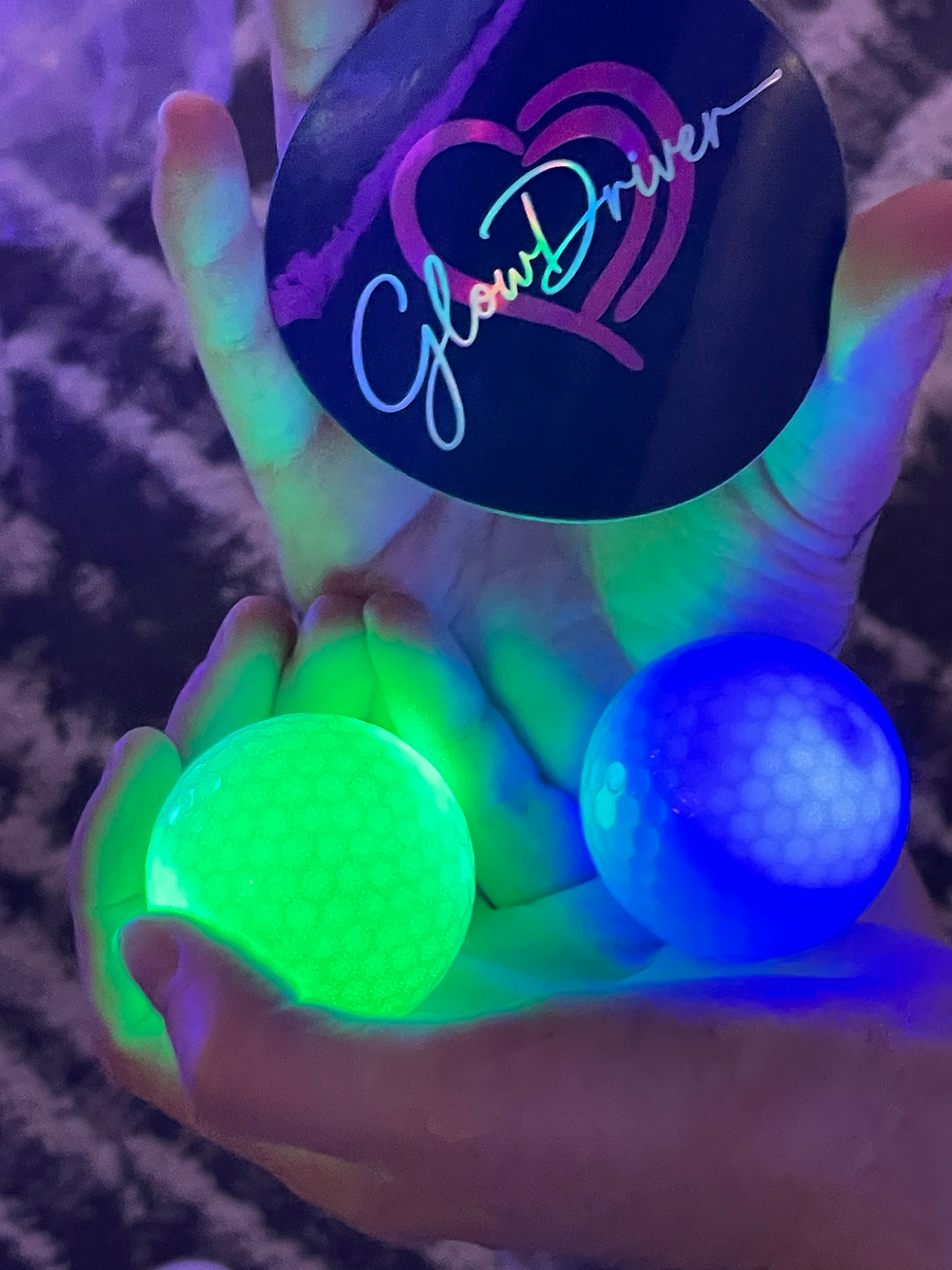
^)> You describe emotion as becoming electricity and the connection between people as a kind of visible light. Where did that visual language come from, and how closely is it connected to the way you hear the music itself?
GD: It is the spark of love’s first kiss. The burst of energy between two people in love. The radiating joy of dancing to your favorite song or having a great night out with your friends. Emotion itself is invisible to the eye, but you can feel it. You know it exists when there’s energy between people.
In the case of EDM, it all ties together. The music, the sound, the emotion and the lights. Electronic music gives you the ability to use light to enhance the experience of the emotion in a song.
That’s where emotion becoming electricity comes from. You take something human that you can’t physically see and translate it into sound, movement, light and energy. It’s basically a description of what I’m trying to do with the music.
^)> The project lives inside a larger world called “Frequencies After Dark,” where attraction, tension, heartbreak and hope all become different kinds of energy. Is there a story or mythology developing behind GlowDriver that listeners will gradually uncover?
GD: Yes, although I don't want it to become a rigid storyline where somebody needs to understand a bunch of mythology before they can enjoy the music.
GlowDriver started as an extension of me creatively, but over time it has also become this character or presence that exists in its own world. “Frequencies After Dark” is really that world, where music, light, nightlife and human emotion all start interacting with each other.
There are definitely pieces of a larger mythology developing, and I like the idea of revealing those gradually through the music, visuals and live show rather than explaining everything up front. I think discovering that world should be part of the fun.
^)> There’s an interesting contrast between GlowDriver being described as “part guide, part mystery.” How much do you want listeners to understand about the character and world, and how much should remain open to their own interpretation?
GD: I want people to understand what GlowDriver represents without necessarily having GlowDriver completely explained to them.
The guide part is really about taking people somewhere emotionally, into the world where the lights go down and the music gets louder and feelings become something you can move through together.
The mystery is important because, first, I don't want to tell somebody what they're supposed to feel. Every person interprets music through their own experiences. But second, the character is still evolving. It is evolving in what GlowDriver means to me, and ultimately in what GlowDriver will mean to everyone else.
I think that is something the audience should have a part in defining too.

^)> “The more you feel, the brighter it gets” seems to be central to GlowDriver’s philosophy. What does that idea mean to you when the feeling isn’t positive — when the emotion is heartbreak, insecurity or longing rather than joy?
GD: To me, brightness comes from intensity and honesty, not happiness.
I don't want GlowDriver to represent only positive emotions. Heartbreak, insecurity and longing can create just as much energy as attraction, hope or joy. They just create a different kind of light.
That’s really the philosophy behind it. Every emotion creates energy. The emotion determines what kind of light it becomes.
Sometimes difficult feelings can even become beautiful once they're expressed, shared and transformed into music. So “the more you feel, the brighter it gets” isn't telling people to be happy. It's saying that feeling deeply is what creates the light in the first place.
(•)> That's all, Folks! Check it out on the Pigeon Opinion Playlist